
How to Get In and Out of Bed After Hip Replacement: Modern Recovery Advice from a London Hip Surgeon
 Read time: 6 mins
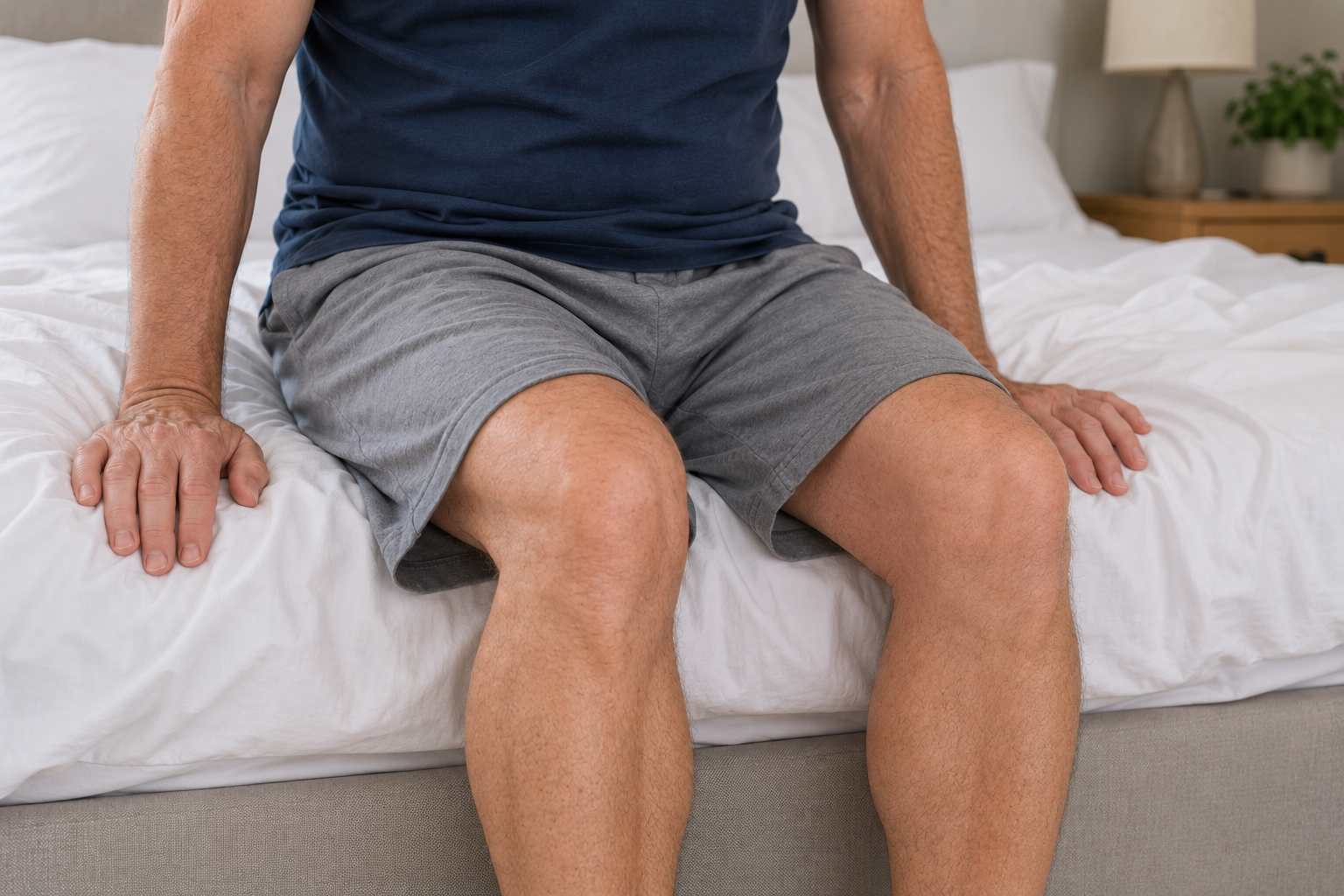
Recovering from hip replacement surgery involves careful attention to even the smallest movements, like getting in and out of bed. We spoke to Consultant Orthopaedic Surgeon, Mr Jamie Griffiths about modern recovery advice after a hip replacement to help a smooth recovery and avoiding strain on your new hip.
One of the most common questions Mr Griffiths hears after a hip replacement is:
“Which leg goes into bed first?”
The good news is that modern hip replacement surgery has changed dramatically over the last decade. As a Consultant Orthopaedic Hip Surgeon practising at St John & St Elizabeth Hospital in London, Mr Griffiths uses an enhanced recovery programme that encourages patients to return to normal movement as quickly and safely as possible.
For the majority of my patients, everyday activities such as getting into bed should feel natural rather than something to fear.
Do I Still Need Hip Precautions?
Traditionally, patients were given strict “hip precautions” after surgery. These often included:
- Avoid bending beyond 90 degrees
- Avoid crossing your legs
- Avoid twisting
- Sleeping with pillows between your legs
These precautions were designed to reduce the risk of hip dislocation when older implant designs and surgical techniques were commonly used.
Today, things are different.
With modern implants, improved surgical techniques and enhanced recovery pathways, most patients no longer require these routine restrictions. Every patient is individual, however, and if you’ve had a complex hip replacement, revision surgery or your surgeon has advised specific precautions, you should always follow their recommendations.
Which Leg Goes Into Bed First After A Hip Replacement?
There isn’t one correct answer.
The easiest method is whichever feels the most comfortable.
Many patients naturally:
- Sit down on the edge of the bed first.
- Lean back onto their elbows.
- Lift both legs onto the bed together, or one at a time.
- Use their arms to help support the movement.
Some patients find it easier to bring the operated leg onto the bed first, while others prefer the non-operated leg first. Neither is inherently right or wrong.
The aim is simply to move in a controlled, comfortable manner without sudden twisting or jerking movements.
Getting Out of Bed After A Hip Replacement
When getting out of bed after a hip replacement there are some simple steps to follow:
- Roll onto your side if comfortable.
- Push yourself up using your arms.
- Swing your legs over the edge of the bed.
- Stand up using your walking aids if required.
Within a few days, many patients find this becomes second nature.
Should I Use a Leg Lifter After A Hip Replacement?
Most patients don’t need one.
Some patients find a leg lifter helpful during the first few days if their thigh feels heavy after surgery, but as the muscles recover this usually becomes unnecessary. The aim is to regain independence as quickly as possible so try not to reply on a leg lifter for too long.
Sleeping After Hip Replacement
The best sleeping position is whichever allows you to rest comfortably. Many patients initially prefer sleeping on their back because swelling can make side sleeping uncomfortable.
As your recovery progresses, sleeping on your side is usually perfectly acceptable, provided it feels comfortable. One of the most important parts of recovery is quality sleep and rest.
Enhanced Recovery Means Earlier Mobility
One of the biggest advances in hip replacement surgery has been enhanced recovery. At St John & St Elizabeth Hospital, Mr Griffiths encourages patients to:
- Stand on the day of surgery
- Walk within hours of their operation
- Climb stairs before going home
- Return home as soon as it is safe to do so
Early mobilisation helps reduce stiffness, improves confidence and lowers the risk of complications such as blood clots.
When Should You Seek Advice?
Although most patients recover smoothly, you should contact your surgical team if you experience:
- Increasing pain rather than gradual improvement
- Significant swelling that suddenly worsens
- Wound leakage
- Fever or feeling generally unwell
- Inability to bear weight on the leg
- A sudden change in the position or function of your hip
Prompt assessment allows any problems to be addressed early and get you back on track with your recovery
Looking for Hip Replacement Surgery in London?
Mr Griffiths specialises in primary, complex and revision hip replacement surgery, with a particular focus on enhanced recovery, rapid rehabilitation and helping patients return to the activities they enjoy. He consults at St John & St Elizabeth Hospital in St John’s Wood, London, where patients benefit from modern hip replacement techniques, personalised rehabilitation and comprehensive follow-up throughout recovery.
Posted on: 30 June 2026
Last updated: 30 June 2026
Tags:
Content provided by Mr Jamie Griffiths - MBBS, BSC (HONS), MRCS, FRCS, Tr&Orth