


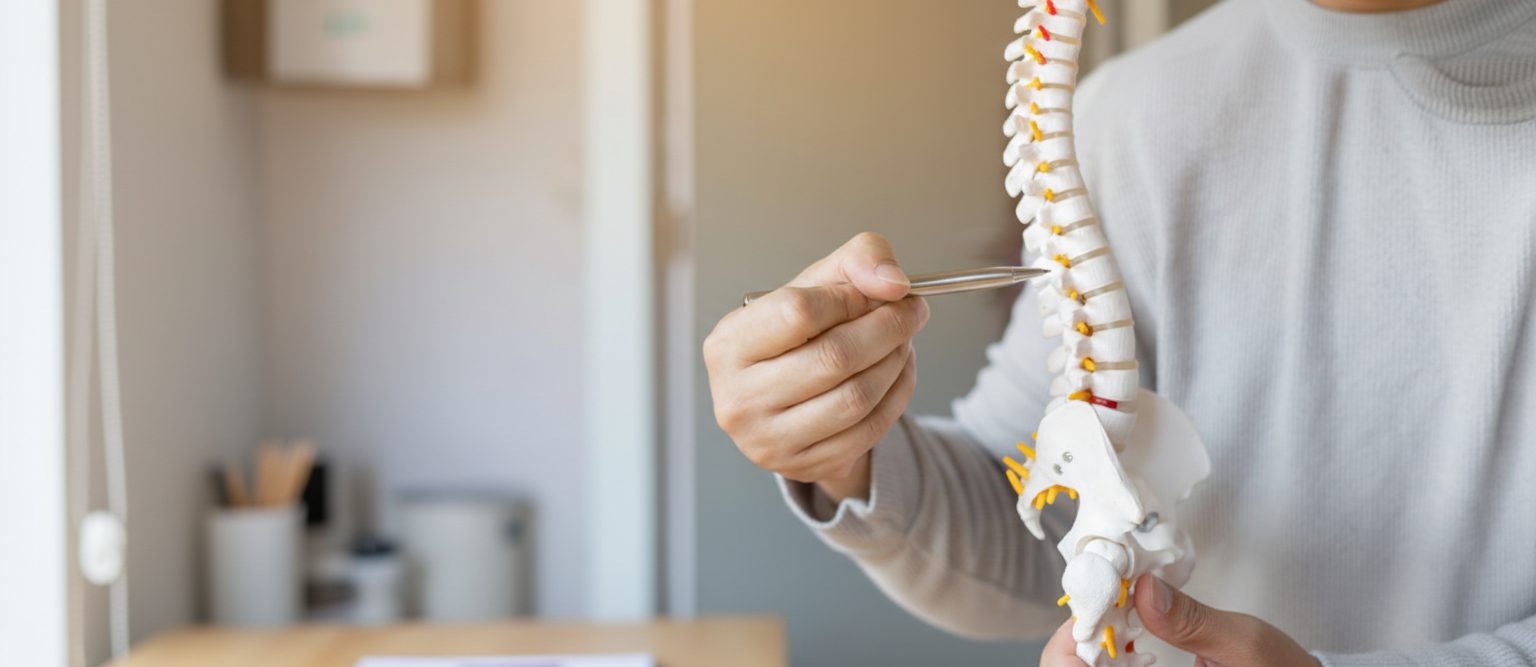
Minimally invasive spinal surgery
Endoscopic spinal surgery is a minimally invasive procedure performed using a small camera (endoscope) and specialised surgical instruments inserted through a tiny incision. Unlike traditional open spinal surgery, this technique allows surgeons to access the spine with significantly less disruption to muscles, soft tissues and bone.
For many patients, endoscopic spinal surgery can provide an effective alternative to more invasive procedures, including spinal fusion or surgery requiring metal implants. The minimally invasive approach may reduce post-operative pain, shorten recovery time and lower the risk of complications, allowing patients to return to normal activities sooner.
Conditions Treated
Your consultant will assess your symptoms and imaging to determine whether endoscopic spinal surgery is the most appropriate treatment.
- Endoscopic spinal surgery can be used to diagnose and treat a range of spinal conditions, including:
- Lumbar disc prolapse (slipped disc)
- Nerve root compression (sciatica)
- Lumbar, thoracic and cervical stenosis
- Foraminal stenosis (compression of the exiting nerve or compression of the nerve just outside the spinal canal)
- Degenerative lumbar spondylolisthesis
- Back and neck pain associated with degenerative spinal conditions
- Cervicobrachialgia (neck-related arm pain)
- Cervical myelopathy (spinal cord compression caused by cervical canal stenosis)
- Spinal cord compression
- Recurrent disc prolapse
- Patients requiring revision spinal surgery
At St John & St Elizabeth Hospital, our consultant spinal surgeons use the latest minimally invasive techniques to deliver personalised treatment for a wide range of spinal conditions. From your initial consultation through to surgery and rehabilitation, you’ll receive expert care tailored to your diagnosis, symptoms and lifestyle.
Endoscopic Procedures
Depending on your diagnosis, treatment may include:
- Endoscopic discectomy to remove part of a prolapsed disc
- Endoscopic spinal decompression to relieve pressure on nerves or the spinal cord
- Endoscopic foraminal decompression to widen the opening where spinal nerves leave the spine
- Revision endoscopic spinal surgery for recurrent symptoms following previous spinal procedures
Each procedure is tailored to the individual patient, with the aim of relieving pain while preserving as much normal anatomy as possible.
Endoscopic spinal consultants
Our endoscopic spinal surgeons work closely with imaging specialists, pain consultants and physiotherapists to ensure a coordinated approach, helping you achieve the best possible outcome with the least invasive treatment appropriate for your condition.
Why Choose Endoscopic Spinal Surgery?
Endoscopic spine surgery can offer greater precision because the endoscope provides a clear, magnified view of the affected area, helping the surgeon identify exactly where a nerve or other structure is being compressed and treat it while minimising disruption to surrounding tissues. By reducing unnecessary disturbance to muscle, bone and soft tissue, the technique can also help preserve the natural structures and stability of the spine, which may support durable, longer-lasting outcomes in appropriately selected patients.
Compared with traditional open spinal surgery, endoscopic techniques may offer several important benefits, including:
- Smaller incisions and higher precision
- Less damage to muscles, soft tissues and bone
- Reduced post-operative pain
- Lower risk of complications
- Shorter hospital stay
- Faster recovery and return to normal activities
- May avoid the need for spinal fusion or metal implants in suitable patients
Not every patient is suitable for endoscopic spinal surgery, but for carefully selected cases it can provide excellent outcomes with a less invasive approach.
Frequently asked questions about endoscopic spinal surgery
Endoscopic spinal surgery is a minimally invasive procedure that uses a small camera and specialised instruments to treat spinal conditions through a very small incision.
For suitable patients, endoscopic spinal surgery may offer advantages including less tissue damage, faster recovery, reduced pain and a lower risk of complications. Your consultant will advise whether it is appropriate for your condition.
In some cases, yes. Endoscopic techniques may successfully treat certain conditions without the need for spinal fusion or metal implants. However, some patients will still require fusion depending on the stability of their spine.
Common indications include prolapsed discs, sciatica, spinal stenosis, foraminal stenosis, nerve root compression and some revision spinal procedures.
Recovery varies depending on the procedure and your individual circumstances, but because endoscopic surgery is minimally invasive, many patients experience a quicker recovery than with traditional open spinal surgery.
Medically reviewed by Mr Salvatore Russo - FRCS (NS) MD (Hons) on 01/08/2026