


What is Plantar Fasciitis Treatment?
Plantar fasciitis treatment refers to the range of therapies used to relieve heel pain caused by inflammation of the plantar fascia, progressing from conservative measures such as rest, stretching and orthotics to more targeted options including extracorporeal shockwave therapy (ESWT) and steroid injections. It is commonly recommended for persistent heel pain that hasn’t improved after several weeks of self-care, particularly in runners, people who stand for long periods at work, or those with tight calf muscles or flat feet.
Both shockwave therapy and steroid injections are non-surgical, outpatient treatments that avoid the need for a hospital stay, and your consultant will advise which is most suitable based on how long you’ve had symptoms and how you’ve responded to previous treatment. Conveniently located in St John’s Wood (NW8), we offer this treatment to patients across London with a focus on safety and compassionate care.
Extracorporeal Shockwave Therapy (ESWT) for Plantar Fasciitis
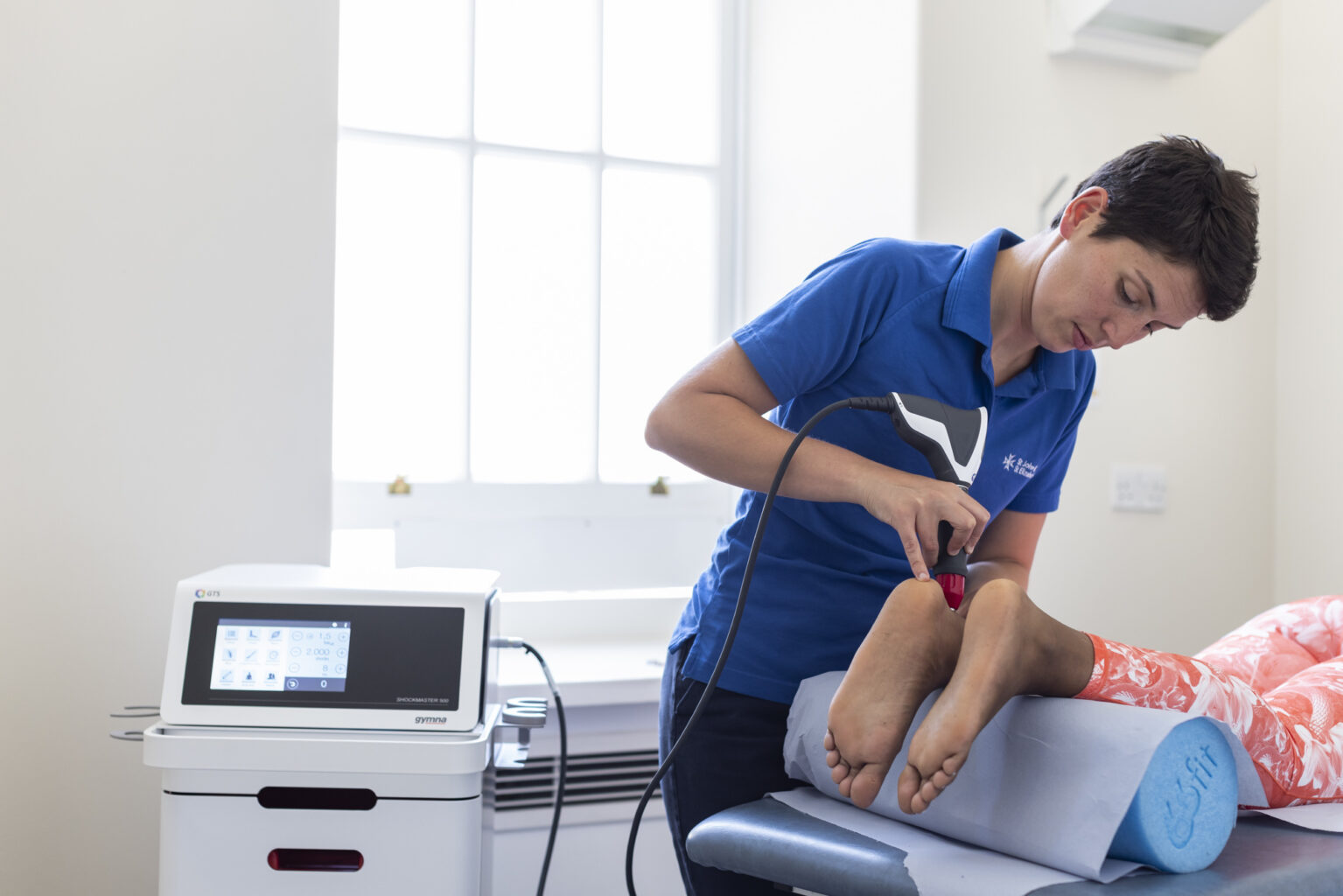
Shockwave therapy delivers high-energy sound wave pulses to the affected area of the heel using a handheld device, triggering a healing response that improves blood flow and helps break down scar tissue in the plantar fascia. It’s a good option for patients who haven’t responded to physiotherapy, anti-inflammatory medication or rest, and most patients need two to three sessions, spaced around a week apart, with no anaesthetic or downtime required.
Steroid Injections for Plantar Fasciitis
An ultrasound-guided steroid injection delivers anti-inflammatory medication directly to the site of pain in the plantar fascia and can provide relief more quickly than shockwave therapy in some cases. Because repeated injections can weaken the fascia and increase the risk of rupture, your consultant will usually limit these to no more than two or three injections a year.
Who is Plantar Fasciitis Treatment suitable for?
- Persistent heel or arch pain that hasn’t improved after 6 to 8 weeks of rest, stretching and supportive footwear
- Pain that is worst with your first steps in the morning or after sitting for a while
- Runners or athletes with overuse-related heel pain
- People whose job involves long periods of standing or walking
- Patients who have already tried physiotherapy or orthotics without lasting relief
Your consultant will assess your individual case, including how long you’ve had symptoms and your activity levels, before recommending the most appropriate treatment.
Plantar Fasciitis Treatment at St John & St Elizabeth Hospital
At our private hospital in London, we offer access to highly skilled foot and ankle consultants, specialist theatres, and tailored post-operative care.
Why choose us:
- Expert Consultants: Our surgeons specialise in plantar fasciitis, with extensive experience in managing long-standing joint pain and deformities.
- Personalised Treatment: Every patient receives a tailored plan, from initial assessment to follow-up care and pain relief.
- Modern Facilities: Surgical and recovery care in a calm and comfortable environment.
- Local Convenience: Located in NW8, we serve the nearby areas of Hampstead (NW3), Kilburn (NW6), and the wider London area.
We are committed to helping you walk more comfortably again, with less pain and greater stability
Consultants who treat Plantar Fasciitis in London
Frequently Asked Questions about Plantar Fasciitis Treatment
Most patients need two to three sessions of shockwave therapy, spaced about a week apart, to feel the full benefit. Some improvement is often noticed within a few weeks of finishing treatment, though it can take up to three months for pain to fully settle.
This depends on your individual case. Steroid injections can offer faster short-term relief but carry a small risk of weakening the plantar fascia if repeated too often, while shockwave therapy works more gradually by stimulating the body’s own healing process and can be repeated more safely. Your consultant will recommend the most appropriate option after assessing your symptoms.
Most patients are referred by their GP, but as a self-pay patient at St John & St Elizabeth Hospital, you can also arrange an assessment directly, including through our private GP service if you don’t yet have a referral.
St John & St Elizabeth Hospital is located in St John’s Wood (NW8), easily accessible for patients from Hampstead (NW3), Kilburn (NW6) and across North and Central London.
By Tube: St John’s Wood station (Jubilee Line) is a 5-minute walk to and from St John & St Elizabeth Hospital.
By Bus: Routes 13, 46 and 113 stop near St John’s Wood Underground Station. Routes 139 and 189 stop on Abbey Road.
By Car: Finchley Road and Kilburn High Road provide direct routes from NW3 and NW6.