


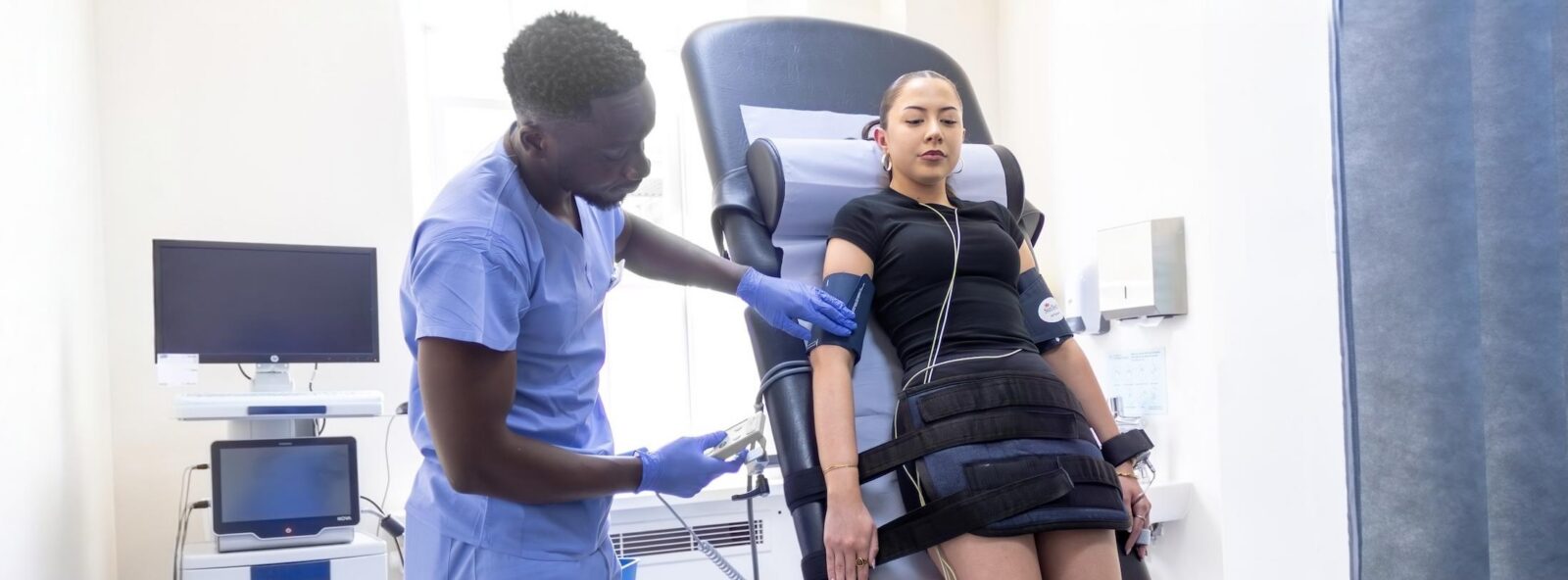
Private Tilt Table Test in London
A tilt table test is used to assess how your blood pressure and heart rate respond to changes in position, particularly when moving from lying down to standing. It is commonly recommended for patients experiencing symptoms such as dizziness, light-headedness or loss of consciousness (syncope).
During the test, you will lie flat on a specialised table while your heart rate and blood pressure are monitored continuously. The table is then gently tilted to an upright position, simulating standing, and your body’s cardiovascular response is carefully observed over a period of time.
This allows our private cardiologists in London to determine whether your symptoms are linked to conditions affecting circulation, heart rhythm or the autonomic nervous system.
At St John & St Elizabeth Hospital, tilt table testing is delivered within our private cardiology clinic in London, providing rapid access to expert-led assessment. Our experienced physiologists and consultant cardiologists work together to ensure accurate diagnosis in a safe and controlled environment.
What symptoms can a Tilt Table Test assess?
A tilt table test may be recommended if you experience:
- Fainting or blackouts (syncope)
- Dizziness or light-headedness
- Near-fainting episodes
- Palpitations when standing
- Sudden drops in blood pressure
- Shortness of breath on standing
- Weakness or unsteadiness when upright
- Visual changes such as tunnel vision or “seeing stars”
- Hearing changes before fainting
- Fatigue or difficulty concentrating when standing
- Symptoms triggered by standing, heat or emotional stress
What conditions can a tilt table test help diagnose?
Tilt table testing helps diagnose a range of conditions, including:
Syncope-related conditions
- Vasovagal (reflex) syncope
- Cardiac syncope (including arrhythmias)
- Situational syncope
Orthostatic intolerance syndromes
- Postural tachycardia syndrome (PoTS)
- Orthostatic hypotension
- Initial orthostatic hypotension
Autonomic disorders
- Autonomic dysfunction
- Diabetic autonomic neuropathy
- Neurological conditions affecting blood pressure control
How Much Does A Tilt-Table Test Cost?
From £655
The cost of a Private Tilt-Table Test starts at £655 at St John & St Elizabeth Hospital.
The price shown is an estimated guide to the hospital charges associated with your test. Your final cost may vary depending on your individual clinical needs and any additional care required. This guide price excludes consultation fees and professional fees charged separately by your consultant and any other specialists involved in your care.
A guide to Tilt Table Testing
This video, produced by the British Heart Foundation, provides a clear overview of what to expect during a tilt table test. This diagnostic procedure is commonly used to assess how your heart rate and blood pressure respond to changes in position, helping clinicians investigate symptoms such as unexplained fainting or dizziness. We hope this guide helps you feel informed ahead of your appointment and will reduce any anxiety ahead of your tilt table appointment.
Frequently asked questions about tilt table tests
The test is performed as an outpatient procedure and typically appointments can last between 45 – 90 minutes. You will lie flat on the tilt table, secured with supportive straps and your heart rate and blood pressure will be monitored continuously. The table is gradually tilted to an upright position, simulating standing, and you will remain in this position while your body’s response is assessed.
You may experience symptoms similar to those you have in daily life. This is helpful in identifying the cause. If needed, the test can be stopped at any time, and you will be returned to a flat position, where symptoms usually resolve quickly.
Please do not eat for 4 hours before your appointment, although you may drink water. Avoid alcohol and heavy exercise for 12 hours prior to testing. Wear loose, comfortable clothing, such as a short-sleeved top and loose trousers or shorts.
The test is designed to assess your usual symptoms, so you may experience dizziness, palpitations, nausea or fainting. Not everyone develops symptoms during testing, and this does not affect the usefulness of the results. You can ask to stop the test at any time.
No. This test is performed without medication. The aim is to observe how your body responds naturally to changes in position.
Yes, the test is generally very safe and complications are rare. If any concerning changes occur, the table is returned to a flat position and symptoms usually resolve quickly. A pre-assessment is carried out to ensure the test is suitable for you.
The test may not be suitable if you have had a recent heart attack or stroke, certain types of heart or vascular conditions, or specific physical limitations. Your doctor will assess suitability before referral.
You will have the opportunity to ask questions before the test and provide consent. You can withdraw from the test at any time.
We will be unable to give any results on the day of your appointment. Results are reviewed by your consultant and sent to your referring doctor. You will need a follow-up appointment to discuss the findings and next steps.
Yes there are alternative treatments to a tilt-table test. Your consultant may recommend that you have an active stand test or ambulatory monitoring