


What is Spinal Fusion surgery?
Spinal fusion involves joining two or more vertebrae together, using a bone graft along with screws, rods or cages where needed, to create a single, solid section of bone that prevents movement between them. It is commonly recommended for patients with severe pain, spinal instability or postural changes, such as a curve, numbness or muscle weakness, and can be used both to stabilise the spine and to correct its shape, as in scoliosis.
The operation is performed under general anaesthetic, and its length and complexity depend on how many vertebrae are being fused and the underlying condition. Conveniently located in St John’s Wood (NW8), we offer this treatment to patients across London with a focus on safety and compassionate care.
Who is Spinal Fusion suitable for?
- Persistent spinal pain that hasn’t responded to pain medicine or other treatment
- Spinal instability caused by severe arthritis, or after a damaged disc has been removed
- A spine that’s no longer in proper alignment, including congenital conditions such as scoliosis
- Spinal stenosis, where narrowing of the spinal canal is compressing the nerves
- Patients where other surgical procedures, such as spinal decompression or discectomy, haven’t fully resolved the problem, or where fusion is recommended alongside them
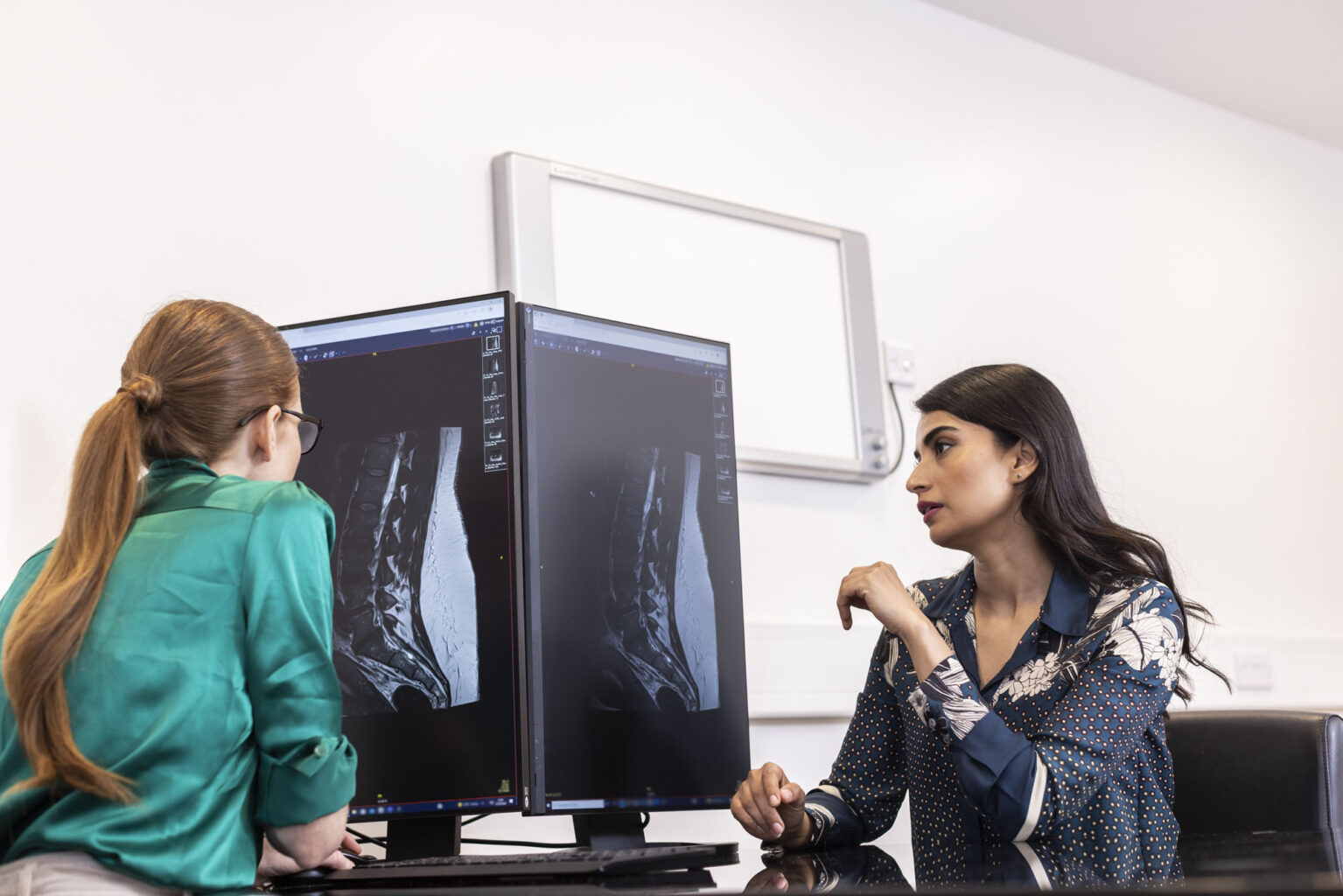
Your consultant will assess your spine, usually with imaging, before recommending whether spinal fusion is the right option for you.
Consultants who perform Spinal Fusion Surgery in London
How Much Does Private Spinal Fusion Cost?
from £17,300*
The cost of private Spinal Fusion starts from £17,300* at St John & St Elizabeth Hospital.
*The price shown is an estimated guide to the hospital charges associated with your treatment from admission to discharge. Your final cost may vary depending on your individual clinical needs, the procedure performed, any additional treatments required, the type of implant/prosthesis used (where applicable), and the length of stay. This guide price excludes consultation fees, diagnostic tests, and professional fees charged separately by your surgeon, anaesthetist, and any other specialists involved in your care.
How to pay for your treatment
If you’re… paying for yourself
Did you know you don’t need private medical insurance to come to St John & St Elizabeth Hospital? As a self-pay patient, you can access safe, outstanding quality health care at times to suit you.
For scans and tests, as well as to see most consultants, you’ll still need to be referred by a medical professional like your GP, but as a self-pay patient, the process is more straightforward. You won’t need authorisation from an insurance provider, and you’ll have greater choice of consultant and appointment times.
If you’re… insured
St John & St Elizabeth Hospital is approved by all major medical insurance companies. If you have a personal private health insurance policy, or your company provide it for you, you can use it to pay for your care from your initial consultation through to treatment, surgery and aftercare such as physiotherapy. Not all private health insurance plans cover the same things. It’s very important to check exactly what you are covered for with your insurance provider.
Frequently Asked Questions About Spinal Fusion
St John & St Elizabeth Hospital is located in St John’s Wood (NW8), easily accessible for patients from Hampstead (NW3), Kilburn (NW6) and across North and Central London.
By Tube: St John’s Wood station (Jubilee Line) is a 5-minute walk to and from St John & St Elizabeth Hospital.
By Bus: Routes 13, 46 and 113 stop near St John’s Wood Underground Station. Routes 139 and 189 stop on Abbey Road.
By Car: Finchley Road and Kilburn High Road provide direct routes from NW3 and NW6.
You’ll have a detailed assessment, usually including imaging such as an MRI or CT scan, and your surgeon will explain the procedure and answer any questions. You’ll be given instructions on fasting before your general anaesthetic, and advice on any medication to pause beforehand, particularly blood thinners.
Under general anaesthetic, your surgeon accesses the affected part of the spine and places a bone graft between the vertebrae to be fused, often supported by screws, rods or cages to hold them securely while the bone heals together. The length of the operation depends on how many vertebrae are involved and the complexity of your case.
You’ll usually stay in hospital for a few days, with pain relief and support from the physiotherapy team to help you start moving safely. Some patients are fitted with a brace to support the spine while it heals, and you’ll be given clear guidance on movements to avoid in the early stages.
Recovery is gradual, as the bone graft needs time to fuse solidly, which can take several months. Most people return to light activities within a few weeks, with a structured physiotherapy programme to rebuild strength and mobility, while a full return to more strenuous activity can take six months to a year, depending on the extent of your surgery.
Your surgeon will let you know whether your stitches or staples need to be removed at a follow-up appointment, usually around 10 to 14 days after surgery, or whether dissolvable stitches have been used. You’ll be given advice on keeping the wound clean and dry until it has fully healed.
Non-surgical options such as physiotherapy, pain management and spinal injections are usually tried first, and other surgical options, such as spinal decompression or prosthetic disc replacement, may be suitable depending on your diagnosis. Your consultant will discuss whether an alternative to fusion is appropriate for you.