

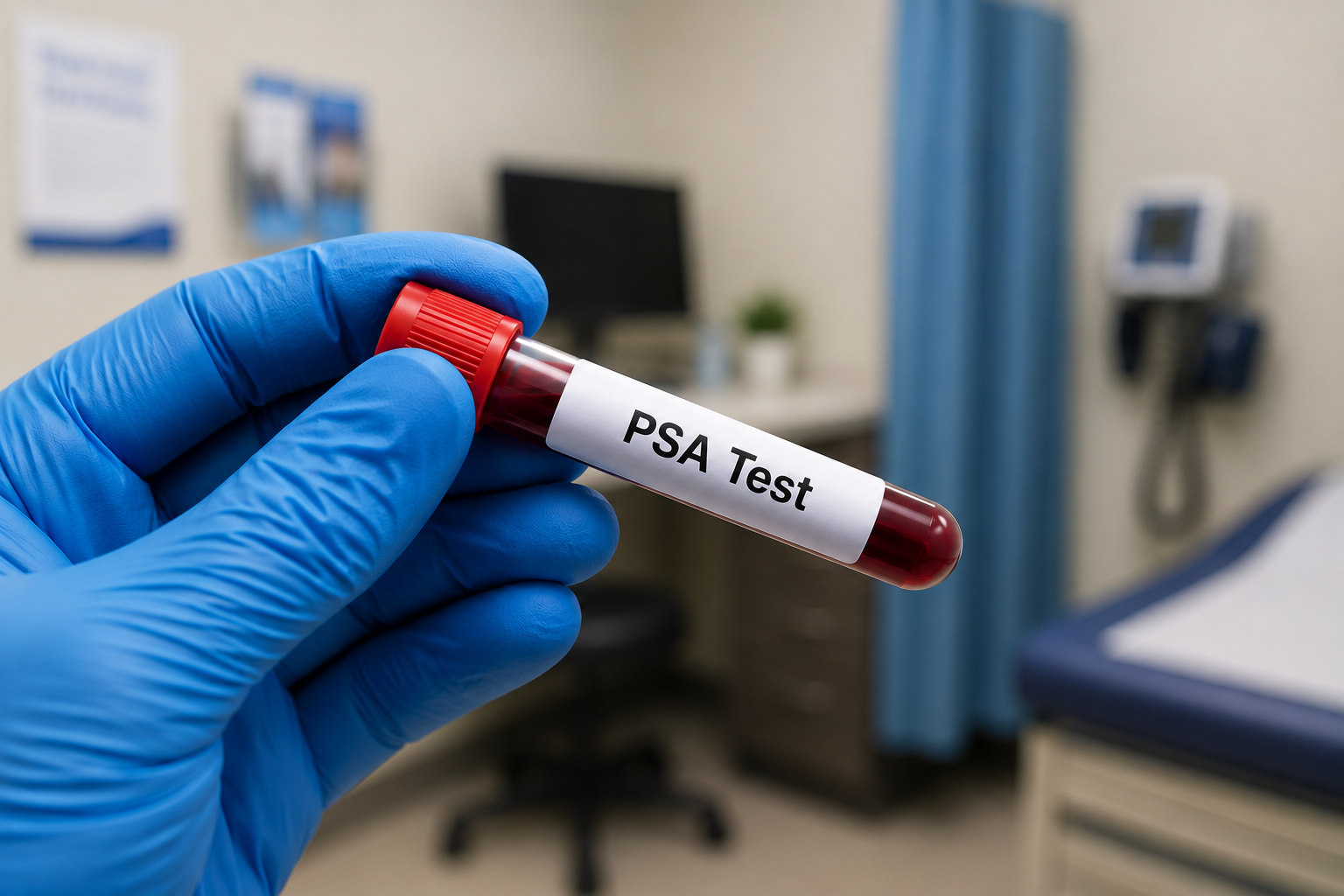
What is a private PSA test?
A PSA test is a blood test that measures the level of prostate specific antigen (PSA), a protein produced by the prostate gland. Small amounts of PSA are normal, but higher levels can be caused by several prostate conditions, including prostate cancer, an enlarged prostate (BPH) or inflammation of the prostate.
A PSA test is one of the first investigations used to assess prostate health, but it cannot diagnose prostate cancer on its own. Some people with raised PSA levels do not have cancer, while some people with prostate cancer may have a normal PSA result. If your PSA level is higher than expected, your consultant may recommend further investigations such as an MRI scan or prostate biopsy to establish the cause.
Choosing a private PSA test allows you to access testing quickly, receive your results promptly and, if required, continue your care with the same experienced urology team or GP without unnecessary delays.
Who should have a private PSA test?
A private PSA test may be suitable if you are experiencing symptoms that could be linked to a prostate condition or if you are concerned about your prostate health.
Your consultant or GP may recommend a PSA test if you have symptoms such as:
- Needing to urinate more frequently, particularly at night
- Difficulty starting or stopping urination
- A weak or interrupted urine flow
- Feeling that your bladder has not emptied completely
- An urgent need to pass urine
- Blood in your urine
- Problems getting or maintaining an erection
Some men choose to have a PSA test even if they do not have symptoms, particularly if they are aged 50 or over or have a higher risk of prostate cancer due to family history or Black ethnicity. Before having the test, your specialist will explain its benefits and limitations so you can make an informed decision about whether it is right for you.
If your PSA result suggests further assessment is needed, our urology team can arrange advanced diagnostic investigations and provide access to specialist treatment for enlarged prostate, prostate cancer and other urological conditions.
How to pay for your PSA Test
If you’re… paying for yourself
Did you know you don’t need private medical insurance to come to St John & St Elizabeth Hospital? As a self-pay patient, you can access safe, outstanding quality health care at times to suit you.
For scans and tests, as well as to see most consultants, you’ll still need to be referred by a medical professional like your GP, but as a self-pay patient, the process is more straightforward. You won’t need authorisation from an insurance provider, and you’ll have greater choice of consultant and appointment times.
If you’re… insured
St John & St Elizabeth Hospital is approved by all major medical insurance companies. If you have a personal private health insurance policy, or your company provide it for you, you can use it to pay for your care from your initial consultation through to treatment, surgery and aftercare such as physiotherapy. Not all private health insurance plans cover the same things. It’s very important to check exactly what you are covered for with your insurance provider.
Frequently Asked Questions About PSA Tests
A PSA test measures the amount of prostate specific antigen in your blood. Raised PSA levels may indicate prostate cancer, an enlarged prostate (BPH), prostatitis (inflammation of the prostate) or other non-cancerous conditions. The test helps your doctor decide whether further investigations are needed.
No. A raised PSA level does not necessarily mean you have prostate cancer. PSA levels can increase naturally with age and may also be raised by an enlarged prostate, infection or inflammation. Further tests are usually needed before a diagnosis can be confirmed.
No. A PSA test is an important first step, but it cannot diagnose prostate cancer on its own. If your PSA level is raised or your symptoms suggest further investigation is needed, your consultant may recommend additional tests such as an MRI scan or prostate biopsy.
A PSA test is a straightforward blood test performed by a healthcare professional. The sample is sent to a laboratory for analysis, and your results are usually available within a few days.
To help ensure accurate results, you should avoid ejaculation, cycling and vigorous exercise for 48 hours before your test. If you have a urine infection, the test should usually be delayed until the infection has fully cleared. Your consultant will advise you if any other preparation is needed.
If your PSA level is higher than expected, your consultant will review your symptoms, medical history and examination findings. You may be advised to repeat the test or undergo further investigations such as an MRI scan or prostate biopsy. At St John & St Elizabeth Hospital, these investigations and any necessary treatment can all be coordinated through our specialist urology service.
A raised PSA level can be associated with an enlarged prostate (benign prostatic hyperplasia or BPH), although the test cannot confirm this diagnosis on its own. Your consultant may recommend additional assessments to determine the underlying cause of your symptoms and discuss the most appropriate treatment options.
Although there are other diagnostic options for prostate cancer and enlarged prostate, such as a digital exam or MRI, a PSA blood test is the first and easiest step to a diagnosis.
Medically reviewed by Mr Leye Ajayi - MBBS MD FRCS FRCS (Urol) on 26/6/2026