


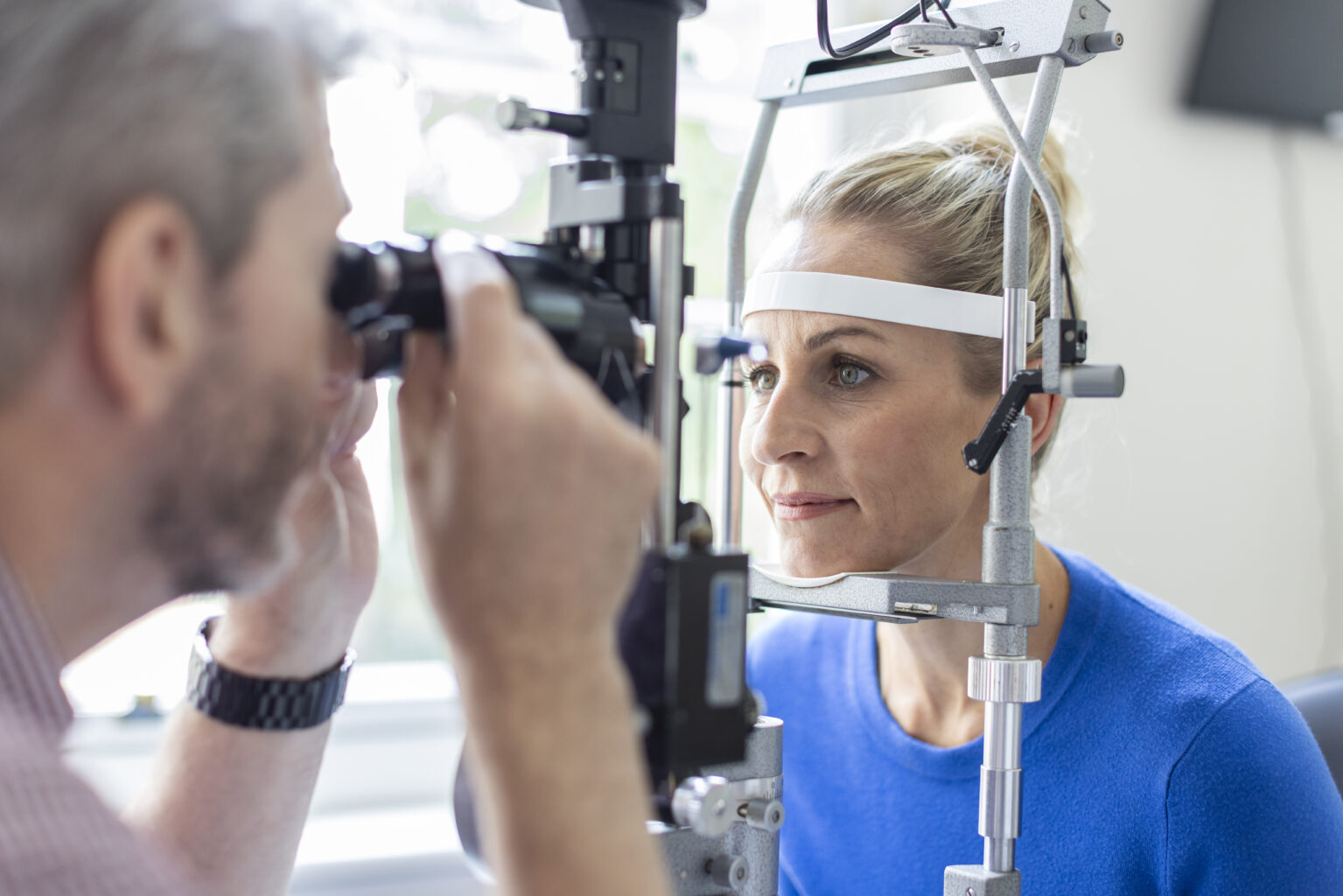
What is Cataract Surgery?
Cataract surgery, also known as phacoemulsification, involves making a tiny incision in the eye and using ultrasound to break up the cloudy lens before removing it. A clear artificial intraocular lens (IOL) is then inserted in its place. The procedure takes around 30 to 45 minutes, is performed under local anaesthetic, and patients go home the same day. Private patients can choose between standard monofocal lenses and premium multifocal or accommodating lenses, which allow the eye to focus at both near and distant ranges.
Surgery is carried out one eye at a time, typically 6 to 12 weeks apart. Based in St John’s Wood (NW8), our specialist ophthalmologists treat patients from across London.
Who is cataract surgery suitable for?
Cataract surgery is recommended when:
- Your vision is blurred or cloudy in a way that glasses can no longer correct
- Cataracts are affecting your ability to carry out daily activities such as reading, driving or recognising faces
- You are experiencing significant sensitivity to light, halos around lights or difficulty with night vision
- An ophthalmologist has confirmed that a cataract is present and that surgery would improve your vision
Your consultant will carry out a full eye examination and take measurements to determine the most appropriate lens implant for your individual needs.
What are cataracts – watch our video
In this video, Consultant Ophthalmologist Mr Marcus Posner, talks what cataracts are, how they develop and how the symptoms of cataracts develop over time. He also explains why he brings his cataracts patients to have their surgery at St John & St Elizabeth Hospital.
Cataract treatment: from diagnosis to treatment – watch our video
In this video, Consultant Ophthalmologist Mr Marcus Posner, explains how cataracts are diagnosed, the treatment options available and what recovery is like after surgery. If you’re considering cataract surgery or want to understand the process from diagnosis to recovery, this video will guide you through every step.
How Much Does Private Cataract Surgery Cost?
from £2,175*
*The price shown is an estimated guide to the hospital charges associated with your treatment from admission to discharge. Your final cost may vary depending on your individual clinical needs, the procedure performed, any additional treatments required, the type of implant/prosthesis used (where applicable), and the length of stay. This guide price excludes consultation fees, diagnostic tests, and professional fees charged separately by your surgeon, anaesthetist, and any other specialists involved in your care.
|
Cataract surgery (standard implant) one eye/ two eye |
£2,175*/ £2,495* |
|---|---|
|
Cataract surgery (premium implant) one eye/ two eye |
£2,850*/ £3,825* |
|
Cataract surgery - one eye, standard implant, with eyeball drainage for retinal repair |
£3,615* |
|
Cataract surgery - one eye, standard implant, with eyeball drainage for retinal repair - with macular surgery |
£3,825* |
|
Cataract surgery - one eye, premium implant, with eyeball drainage for retinal repair |
£4,275* |
|
Cataract surgery - one eye, premium implant, with eyeball drainage for retinal repair - with macular surgery |
£4,495* |
How to pay for your treatment
If you’re… paying for yourself
Did you know you don’t need private medical insurance to come to St John & St Elizabeth Hospital? As a self-pay patient, you can access safe, outstanding quality health care at times to suit you.
For scans and tests, as well as to see most consultants, you’ll still need to be referred by a medical professional like your GP, but as a self-pay patient, the process is more straightforward. You won’t need authorisation from an insurance provider, and you’ll have greater choice of consultant and appointment times.
If you’re… insured
St John & St Elizabeth Hospital is approved by all major medical insurance companies. If you have a personal private health insurance policy, or your company provide it for you, you can use it to pay for your care from your initial consultation through to treatment, surgery and aftercare such as physiotherapy. Not all private health insurance plans cover the same things. It’s very important to check exactly what you are covered for with your insurance provider.
Frequently Asked Questions About Cataract Surgery
The cost of private cataract surgery starts from £2,175* at St John & St Elizabeth Hospital, and varies depending on the type of procedure and lens implant chosen. Please see the guide pricing table above for a full breakdown.
| Procedures & Implants | Cataract Surgery Cost |
| Cataract surgery (with a standard implant, one eye) | £2,175* |
| Cataract surgery (with a standard implant, two eyes) | £2,495* |
| Cataract surgery (with a premium implant, one eye) | £2,850* |
| Cataract surgery (with a premium implant, two eyes) | £3,825* |
| Cataract surgery (one eye, with a standard implant & eyeball drainage) | £3,615* |
| Cataract surgery (one eye, with a standard implant, eyeball drainage & macular surgery) | £3,825* |
| Cataract surgery (one eye with a premium implant & eyeball drainage) | £4,275* |
| Cataract Surgery (one eye with a premium implant, eyeball drainage & macular surgery) | £4,495* |
*The price shown is an estimated guide to the hospital charges associated with your treatment from admission to discharge. Your final cost may vary depending on your individual clinical needs, the procedure performed, any additional treatments required, the type of implant/prosthesis used (where applicable), and the length of stay. This guide price excludes consultation fees, diagnostic tests, and professional fees charged separately by your surgeon, anaesthetist, and any other specialists involved in your care.
Common symptoms of cataracts include blurred or cloudy vision, increased sensitivity to light and glare, seeing halos around lights, double vision in one eye, difficulty seeing at night, faded or yellowed colours, and frequent changes in glasses prescription. Symptoms often develop gradually and may initially be managed with stronger glasses or brighter lighting. Surgery is recommended when vision cannot be adequately corrected with glasses and cataracts are affecting daily life.
St John & St Elizabeth Hospital is located in St John’s Wood (NW8), a well-connected area of North West London. We’re close to Hampstead (NW3) and Kilburn (NW6), making us accessible to patients across the region.
By Tube:
- St John’s Wood station (Jubilee Line) is just a 5-minute walk from the hospital.
- Finchley Road (NW3) and Kilburn stations (NW6) on the Jubilee Line provide excellent connections.
By Bus:
- Wellington Road: Routes 13, 46, and 113 stop near St John’s Wood Underground Station, just a short walk from the hospital.
- Circus Road: Routes 46 and 187 stop close to the hospital’s Circus Road entrance.
- Abbey Road: Routes 139 and 189 stop near the junction where Grove End Road becomes Abbey Road, providing easy access.
Major Roads:
If you’re travelling from NW3 or NW6, main routes such as Finchley Road or Kilburn High Road offer a direct approach to the hospital.
Our location ensures convenient travel for patients from across London, particularly those in NW8, NW3, and NW6 postcodes.
Age-related cataract
This affects older people and is by far the most common form of cataracts. In the UK, about 1 in 3 people over the age of 65 has a cataract, with men and women being equally affected. Often both eyes are impacted, although one eye may be worse than the other. Age-related cataracts often form gradually over many years. As the effects are gradual, many people with an early stage cataract do not realise. Cataracts become progressively worse however and can eventually result in total vision loss.
It isn’t known why cataracts are more likely to appear as we get older. However, some factors may increase your risk:
- Smoking
- Diabetes
- A family history of cataracts
- Drinking too much alcohol
- Long-term steroid use
Congenital cataracts (present at birth)
These are uncommon but it is important they are diagnosed early, as vision is learned very early in infancy. A congenital cataract stops the eye from learning to see and can cause blindness that persists even once the cataract has been removed. As such, it is vital for congenital cataracts to be removed as soon as possible after birth.
Other types of cataracts
Other uncommon causes of cataracts can stem from an injury to an eye, or as a result of radiation exposure. Cataracts can sometimes develop as a secondary problem for people with conditions such as diabetes.
Cataracts are often detected during routine eye examinations, sometimes before you notice vision problems. In early stages, stronger glasses and brighter lighting may help, but the only effective treatment is replacing the cloudy lens with a clear one. If your optician diagnoses cataracts, they will recommend seeing an ophthalmologist for further assessment and treatment.
At your consultation, an ophthalmologist will discuss your symptoms, medical history, and perform a detailed eye examination. They will also take measurements to determine the right lens implant for you. If surgery is recommended, they’ll explain the procedure, risks, benefits, and your lens options, such as multifocal or accommodating lenses. Before surgery, a pre-assessment will check your fitness for surgery, including blood and urine tests. It’s also an opportunity to ask questions.
Cataract surgery is a day procedure, usually under local anaesthetic. Sedation may be provided for relaxation if needed. You’ll receive detailed fasting instructions if sedation is used. Wear comfortable clothes, avoid make-up, and bring essentials like medications and a charger. Upon arrival, a nurse will check your vitals and review your medical history. Your doctor will explain the procedure again before surgery.
The surgery focuses on one eye at a time, typically 6 to 12 weeks apart. Through a small incision, the surgeon removes the cloudy lens using ultrasound and suction. A clear plastic lens is then inserted in its place. The procedure is precise and uses advanced techniques to ensure safety and effectiveness.
After surgery, your eye will be padded, and you’ll be monitored before being discharged the same day. Expect some discomfort as the anaesthetic wears off, but pain relief and eye drops will be provided. Vision may be blurry, and your eye might feel itchy or dry for a few days. Avoid rubbing your eye, strenuous activities, and heavy lifting during recovery. Most patients notice clearer vision and brighter colours within days, with full recovery in 4-6 weeks. Follow-up appointments will ensure proper healing, and any severe pain or sudden vision loss should be reported immediately.
No, there are no alternative treatments for cataracts other than surgical intervention. Unfortunately, cataracts will not go away by themselves and there are currently no other treatments available other than surgery.