
Healing From Shoulder Surgery: A Recovery Timeline
 Read time: 8 mins
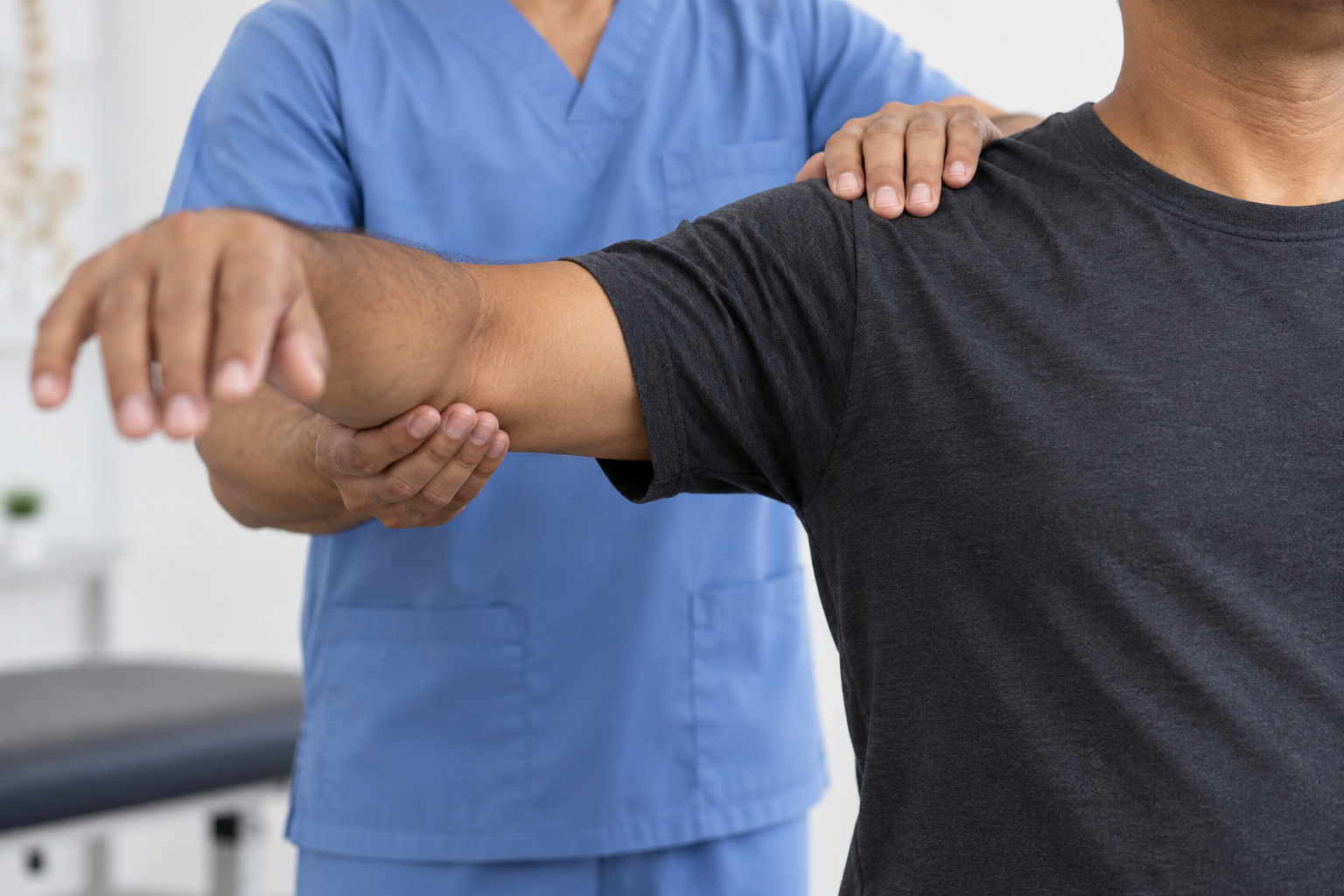
Shoulder surgery is commonly performed to treat pain, stiffness, instability, tendon injuries and joint damage. For many patients, the biggest question is not simply whether the operation will work, but how long recovery will take and when normal life can resume.
Whether you have had arthroscopic shoulder surgery, rotator cuff surgery, shoulder replacement surgery or a labrum repair, recovery usually follows the same broad principles: protect the repair, restore movement gradually, rebuild strength and avoid doing too much too soon.
The exact timeline depends on your procedure, your general health, your dominant arm, your work, your sport and how closely you follow your rehabilitation plan. We spoke to Consultant Shoulder & Elbow and Sports Surgeon, Mr Carlos Cobiella, to create a guide of a realistic overview of what most patients can expect. Mr Carlos Cobiella is a highly experienced Consultant Orthopaedic Shoulder & Elbow Surgeon. At St John & St Elizabeth Hospital, he offers expert diagnosis and treatment for a wide range of upper limb problems, with a particular focus on sports injuries, rotator cuff injuries, fractures and minimally invasive surgery.
Types of Shoulder Surgery Covered
Shoulder surgery can involve several different procedures. Common examples include:
Rotator cuff surgery
Which repairs torn rotator cuff tendons that help move and stabilise the shoulder.
Arthroscopic shoulder surgery
Also known as shoulder arthroscopy, which uses a small camera and instruments to diagnose or treat problems inside the shoulder joint.
Shoulder replacement surgery
Where part or all of the shoulder joint is replaced, often because of arthritis or severe joint damage.
Shoulder impingement surgery
A procedure to relieve pain and improve function of the rotator cuff tendons.
Shoulder stabilisation surgery
A procedure to repair shoulder instability or repeated dislocations.
Recovery is usually quicker after minor arthroscopic procedures than after open rotator cuff surgery or shoulder replacement surgery.
What Affects Your Recovery?
No two patients recover at exactly the same pace. Your recovery timeline can be affected by:
- The type and complexity of surgery
- Your age and general health
- Smoking, which can slow tissue healing
- Whether this was your first shoulder surgery or a revision procedure
- How closely you follow your rehabilitation plan
- Your strength and fitness before surgery
- Whether the operation was on your dominant arm
The most important thing is to follow the advice of your surgeon and physiotherapist, rather than comparing your progress too closely with someone else’s.
Shoulder Surgery Recovery Timeline
Recovery is usually divided into phases. Each phase has a different goal, and it is important not to rush ahead before the shoulder is ready.
Phase 1: The First 2 Weeks After Surgery
The first two weeks are focused on managing pain and reducing swelling, whilst protecting the surgical repair, if there has been one. You will usually wake from surgery with your arm in a sling, which you may need to wear consistently during the early stages of recovery.
Pain is expected during this phase. Some patients receive a nerve block during surgery, which can provide pain relief for around 12–24 hours before it wears off. After this, prescribed pain medication should be taken as directed. The regular use of ice is helpful at this stage to reduce pain.
Swelling and bruising around the shoulder and upper arm are also common. Bruising may spread down the arm over the first few days, which is usually part of the normal healing process.
Sleeping can be difficult in the first week. Many patients find it more comfortable to sleep semi-reclined in a chair or propped up with pillows, rather than lying flat.
During this stage, you should wear your sling as instructed, use ice regularly to help with pain and swelling, avoid lifting with the operated arm and wear loose clothing that is easy to put on and take off (eg shirts with buttons).
Phase 2: Weeks 2–6 – Protecting the Repair
During the first few weeks, the priority remains protection. The repaired tissue is still fragile, so doing too much too soon can increase the risk of complications.
You will usually remain in a sling for around 4–6 weeks, depending on your procedure. Your physiotherapist may introduce gentle passive exercises, where the operated arm is moved with assistance rather than using the shoulder muscles actively.
Common early exercises may include:
- Pendulum exercises
- Supported shoulder rotation
- Assisted shoulder forward elevation
These exercises help reduce postoperative stiffness. At this stage, consistency matters more than intensity. Avoid painful exercises.
Daily tasks such as showering, dressing and washing your hair may require some help at first. Loose-fitting clothes, front-opening tops and support from family or friends can make this phase easier.
Phase 3: Weeks 4–8 – Rebuilding Movement
Between four and six weeks after surgery, depending on your procedure, many patients begin active exercises. These are movements powered by your own shoulder muscles, without external support. These will usually be undertaken under the supervision of your physiotherapist.
You may start to wean out of the sling during this phase, and your rehabilitation will focus on improving range of motion and control of the shoulder.
It is common to feel frustrated during this stage because progress can still feel slow. However, the rotator cuff tendons and surrounding tissues are still healing. Regular physiotherapy and home exercises are key to achieving a good long-term result. Using ice after the exercise sessions will be helpful at this stage.
Some discomfort during stretching or strengthening is normal. However, pain that does not settle within an hour of exercise, or pain that persists at rest, should be discussed with your physiotherapist or surgeon.
Phase 4: Months 2–6 – Strengthening
From two months onwards, once the active range of motion is appropriate, many patients begin to notice more meaningful improvements in strength and function. Physiotherapy usually becomes more focused on rebuilding the rotator cuff muscles, shoulder blade control and overall shoulder endurance.
This phase may include:
- Progressive resistance exercises
- Shoulder blade strengthening
- Overhead reaching practice
- Sport-specific or work-specific movements
- Gradual return to lifting
Most everyday activities, driving and many work tasks are possible during this stage. However, heavy lifting, overhead work and contact sports should only be resumed once your surgeon or physiotherapist confirms it is safe.
Phase 5: 6–12 Months and Beyond – Full Recovery
Full recovery from shoulder surgery can take 6–12 months, particularly after rotator cuff surgery or shoulder replacement surgery. Some patients may continue to improve for longer than this.
By this stage, most people have returned to normal activities with much less pain and better movement. If you still have significant pain after 12 months, your surgeon may recommend further assessment.
When Can I Return to Daily Activities?
The table below gives general guidance only. Your own timeline may differ depending on your procedure and your surgeon’s advice.
| Activity | Approximate timeframe |
| Getting dressed independently | 1-2 weeks |
| Showering without assistance | 1-2 weeks, wound permitting |
| Cooking simple meals with one hand | 1-2 weeks |
| Typing and computer work | 2 – 4 weeks |
| Sleeping without a sling | 4 – 6 weeks |
| Reaching above shoulder height | 6 – 8 weeks |
| Light housework | 6 – 8 weeks |
| Carrying light shopping bags | 8 – 12 weeks |
| Gardening and digging | 3 – 6 months |
| Heavy lifting or manual tasks | 4 – 6 months |
Driving After Shoulder Surgery
Most patients are unable to drive safely for around 6–8 weeks after shoulder surgery. You must be able to control the steering wheel, perform an emergency stop and react quickly without pain or hesitation.
Your return to driving will depend on:
- Which shoulder was operated on
- Whether the operation was on your dominant arm
- Whether you drive a manual or automatic car
- Your strength, reaction time and range of movement
- Whether you are still taking medication that affects concentration
Manual cars may require a longer recovery because of gear changing. Automatic cars may be possible slightly earlier for some patients, but only when movement and control are safe.
In the UK, you are responsible for making sure you are fit to drive. Driving while impaired by pain, medication or restricted movement could affect your insurance. It is sensible to check with your insurer and wait for clearance from your surgeon before returning to the road.
Returning to Work
Your return to work depends heavily on your role. Desk-based work is often possible earlier than manual or overhead work.
If your job is physically demanding, your surgeon may provide a fit note to support a phased return.
| Type of work | Approximate return timeframe |
| Desk-based or office work | 2-4 weeks |
| Working from home, light duties | 1-2 weeks if comfortable |
| Light manual work | 6 – 12 weeks |
| Moderate manual work | 3 – 4 months |
| Heavy manual labour or overhead work | 4 – 6+ months |
Returning to Sport and Exercise
Sport should be resumed gradually. Returning too soon can increase the risk of re-injury, especially after rotator cuff surgery.
| Sport or Activity | Approximate return timeframe |
| Walking | 1-2 weeks |
| Stationary cycling | 1-2 weeks |
| Running | 4-6 weeks |
| Gentle swimming or kicking only | 4-6 weeks, once the wound has healed |
| Golf, putting or chipping | 10 -12 weeks |
| Golf, full swing | 4-6 months |
| Full swimming strokes | 4-6 months |
| Gym or upper body weight training | 4-6 months |
| Tennis or racquet sports | 4-6 months |
| Contact sports | 4-6 months |
| Overhead sports | 4-6 months |
Minor arthroscopic procedures may allow a faster return to some activities, but you should always get clearance before returning to sport.
Physiotherapy After Shoulder Surgery
Physiotherapy is one of the most important parts of shoulder surgery recovery. A well-structured rehabilitation plan helps restore movement, rebuild strength and reduce the risk of stiffness.
Your physiotherapist will assess your shoulder movement, strength and function, then progress your exercises in line with tissue healing. They will also check for problems such as frozen shoulder, persistent pain or poor movement patterns.
Most patients attend physiotherapy for 3–6 months after surgery, although more complex cases may need longer. Appointments may be more frequent in the first three months and reduce as you become more confident with your home exercise programme.
Your home exercises are just as important as your appointments. Patients who complete their exercises regularly tend to achieve better outcomes.
Pain Management During Recovery
Some pain is normal after shoulder surgery, especially in the early weeks. Good pain control helps you sleep, move more comfortably and take part in physiotherapy.
Pain relief may include paracetamol, stronger prescription pain relief for a short period, and the effects of a nerve block used during surgery. Your surgical team will advise what is suitable for you. Anti-inflammatory medication tends to delay healing and might be advised against by your surgeon.
Ice can also help reduce swelling and discomfort. Apply an ice pack for 15–20 minutes at a time, wrapped in a damp cloth to protect the skin.
You should contact your surgical team if you experience:
- Sudden or worsening shoulder pain
- Pain that is not helped by medication
- Redness, warmth, discharge or an unpleasant smell from the wound
- A high temperature or fever
- Worsening numbness, tingling or weakness in the arm or hand
- Significant calf or thigh swelling, pain or tenderness
Nutrition and Lifestyle
Good nutrition and healthy lifestyle choices can support healing. Protein is important for tissue repair, while vitamin C and zinc support wound healing. Staying hydrated also helps blood flow to healing tissues.
Smoking can significantly slow healing by reducing blood flow. If you smoke, stopping before and after surgery is one of the most useful things you can do to support your recovery.
Alcohol should be limited in the early recovery period, especially while taking pain medication.
Tips for a Smoother Recovery
Follow your rehabilitation plan carefully and complete your home exercises as advised. Prepare your home before surgery by moving everyday items to easy-to-reach places and arranging a comfortable place to rest.
Wear loose clothing, accept help in the first few weeks and avoid rushing back into lifting or sports. If something feels wrong, speak to your physiotherapist or surgeon rather than pushing through pain.
Recovery can feel slow at times, but with patience, consistency and the right support, most patients regain good shoulder function and return to their usual activities.
Posted on: 10 September 2026
Last updated: 10 September 2026
Tags:
Content provided by Mr Carlos Cobiella - LMS FRCS Ed (Tr&Orth)